Fashion Blog

Home > Fashion Blog

Fashion News

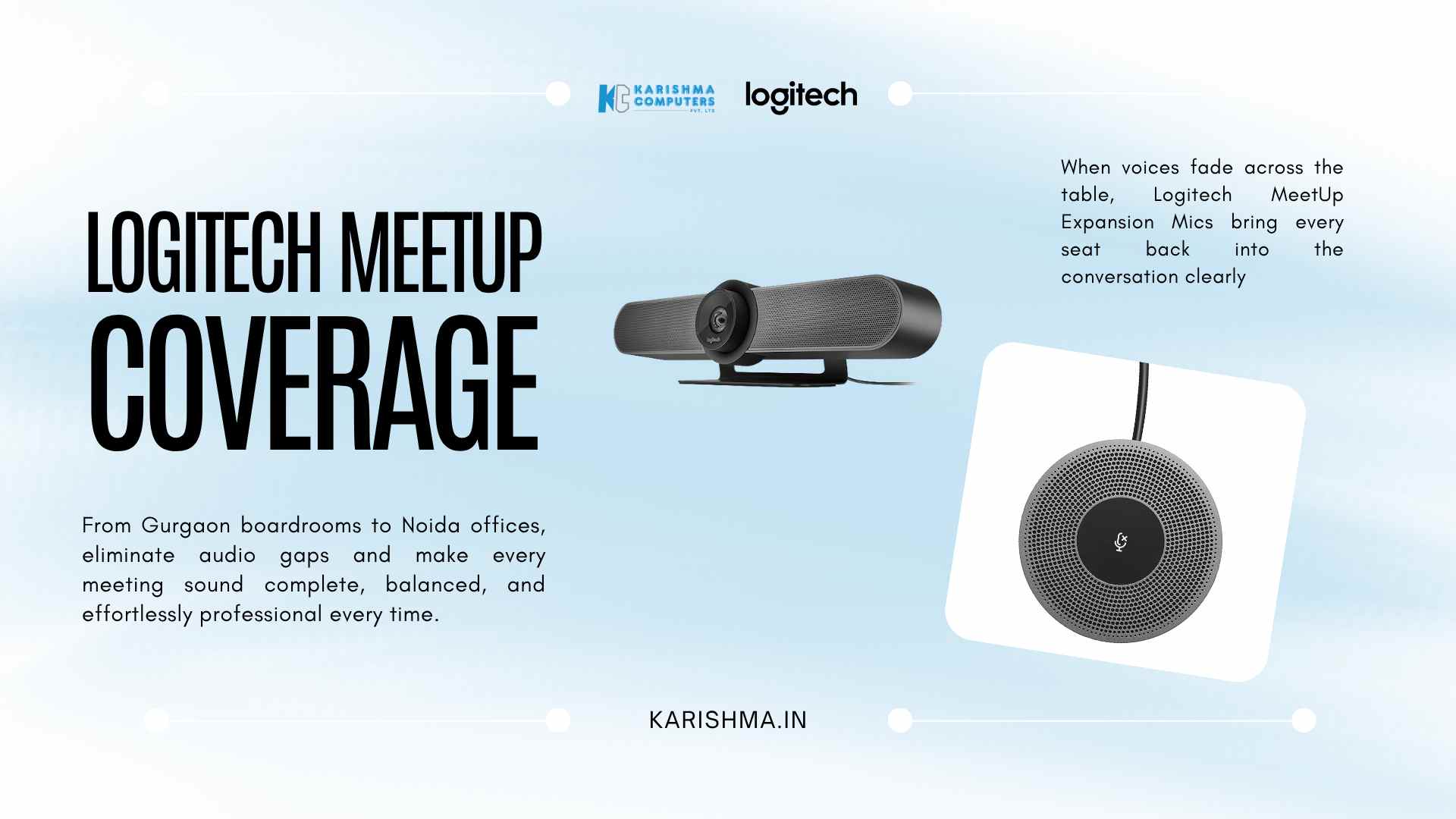
Logitech MeetUp Expansion Mics installed on conference table in Delhi NCR boardroom

Solving the Audio Gap: Logitech MeetUp Expansion Mics for Delhi NCR Boardrooms

A Gurgaon-based financial consultancy arranged its Logitech MeetUp Expansion Mics procurement two months after a senior client on a Teams call asked, for the third time in the same meeting, to please repeat what had just been said from the far end of the table. The camera was functioning correctly. The video was sharp and the framing steady. But the microphone had reached its design limit three seats back from the device, and voices at the far end of the twelve-seat table were arriving as muffle and approximation on the remote side. The expansion mics resolved this. The room did not change. The audio outcome did. The Room That Hears But Cannot Fully Capture Conference rooms across Noida Sector 62 and DLF Cyber City share a version of the same configuration: a Logitech MeetUp mounted at the display wall, handling video with precision, while audio coverage diminishes toward the far end of the table. Participants seated within two metres of the device contribute to calls at full clarity. Participants three, five, or six metres away become a guessing exercise for the remote side. The MeetUp was engineered for huddle rooms. Spaces built for four to six people, distances of two to three metres, layouts where a single device covers the full acoustic footprint without assistance. Scale that device into an eight-seat or fourteen-seat boardroom and the physics shift. The beamforming pickup array captures what is within range. What falls outside does not register with the same clarity. Remote participants develop habits that fill the gaps quietly: asking for repetition, waiting for context to arrive through subsequent slides, or simply disengaging without anyone in the room noticing the moment it happens. Decisions get made based on what was heard rather than what was said. Follow-up emails grow longer. Agreement from the previous call turns into an open question by the next one. The equipment is never the named explanation, but the equipment is the problem. How Logitech MeetUp Expansion Mics Extend Coverage Without Complexity Logitech MeetUp Expansion Mics connect to the MeetUp unit via a dedicated USB port, functioning as an integrated extension of the same audio system rather than as a secondary device requiring separate management. Each unit repositions the beamforming pickup zone along the table’s length, so participants at the room’s midpoint or far end register at the same audio level as those seated closest to the camera. Up to three expansion mics can be linked in a single room configuration. A twelve-seat boardroom places one unit at the MeetUp, one at the table’s midpoint, and one at the far end. Every seat falls within effective pickup range. Nobody adjusts speaking volume. No participant chooses a seat for audio advantage. The call begins and audio functions as expected across the full room. This architecture is why IT administrators at Cyber Hub Gurgaon offices report cleaner deployment outcomes with this setup. There is no separate audio driver to install, no secondary platform to configure, and no calibration sequence requiring technical oversight on the day of the call. The expansion mics draw power and signal through the MeetUp itself. Plug-and-play, no manual intervention after the cable is connected. Beamforming Technology Inside Logitech MeetUp Expansion Mics Each expansion mic unit contains a beamforming microphone array that isolates the human voice from ambient room noise. Air conditioning, keyboard sounds from the adjacent seat, corridor noise bleeding through a glass partition: the beamforming processing deprioritises all of these consistently. What reaches the remote participant is conversation, not environment. RightSound technology governs the full MeetUp audio chain from pickup to output. The beamforming array captures directionally, the signal passes through echo cancellation and noise suppression, and the audio arriving at the remote side carries the clarity of a closer conversation. For teams connecting from Bengaluru, Mumbai, or internationally, the audio impression of a Delhi NCR boardroom changes substantially when the full expansion mic chain runs across the table. Microsoft Teams and Zoom certifications extend compatibility across both platforms, with no calibration required on either. The Boardroom Cost That Goes Unmeasured A consulting firm operating near Sector 44, Gurgaon ran client briefings through a single MeetUp configuration for fourteen months. Three client escalations during that period traced back, in post-project reviews, to communication failures on calls: a scope change the client insisted was never clearly stated, a pricing revision that never registered with the remote finance team, and a timeline misalignment that arrived as a surprise in the final delivery week. The combined cost, in rework, client recovery meetings, and one delayed contract, exceeded the price of a complete three-unit expansion setup by a considerable multiple. After deployment, the same boardroom ran forty-six consecutive client sessions without a single audio complaint documented in the team’s internal project reviews. The observation from the client-facing team was unremarkable: the calls simply ran without friction. That unremarkable observation is precisely the outcome a well-configured expansion mic chain delivers. Not the ability to notice the technology working, but the absence of the problem the technology was solving. Configuration Notes for Delhi NCR Office Setups Offices in Okhla’s commercial estates, professional services firms near Connaught Place, and mid-size technology companies in Faridabad share a common boardroom profile: ten to sixteen seats, a single conferencing device, and a daily hybrid meeting schedule. The Logitech MeetUp Expansion Mics scale to each of these configurations without requiring structural changes to the room or the existing cabling. Each expansion mic is low-profile and matte-finished, sitting unobtrusively on the table surface or routing cable through under-table channels. Setup from unboxing to first call runs consistently under twenty minutes. For organisations standardising on Microsoft Teams Rooms or Zoom Rooms across multiple Delhi NCR locations, the MeetUp and its expansion mic array deploys as a certified endpoint, reducing support overhead and ensuring room-to-room consistency without repeated configuration work. When Room Size Becomes the Decision Point The MeetUp handles rooms up to six seats without expansion assistance. Once a room consistently seats seven or more participants, or once
Read More »
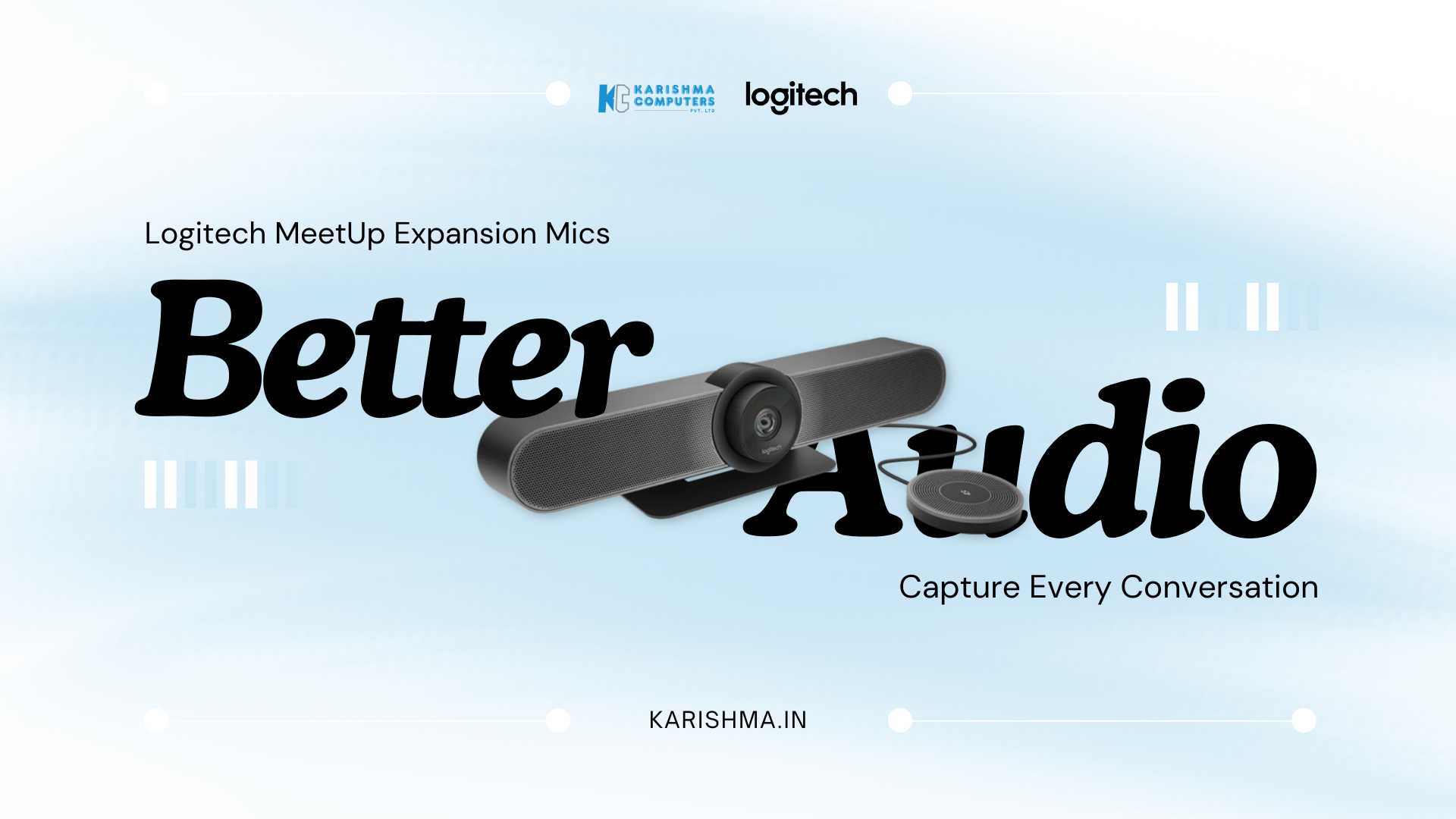
Logitech MeetUp Expansion Mics placed on a conference table in a mid-size meeting room for hybrid collaboration

Logitech MeetUp Expansion Mics and the Audio Coverage Problem That Hybrid Teams Stop Noticing

Logitech MeetUp Expansion Mics and the Audio Coverage Problem That Hybrid Teams Stop Noticing Logitech MeetUp Expansion Mics address a very specific failure mode. Understanding it requires understanding the room the MeetUp was built for — and what happens when that room grows. The Logitech MeetUp is designed for huddle rooms. Small spaces. A table that seats six, a display on the wall, and a camera-speakerphone unit that handles everything within a defined range. For that application, it performs well. The 120-degree field of view captures the room. The beamforming microphone array picks up voices at the near end of a standard huddle table. Remote participants can see and hear everyone present. Then the room changes. A team grows. The six-seat huddle room becomes the ten-seat boardroom. The table lengthens. The people at the far end of the table are now sitting outside the MeetUp’s microphone pickup range. They can hear the meeting. The remote participants cannot hear them. This is the problem the expansion mics solve, and it is more common across Delhi NCR’s commercial office inventory than most organisations realise until a remote participant finally says it: ‘We can’t hear the people at the far end.’ The Geometry of the Problem The MeetUp’s integrated beamforming microphones have an effective pickup range suited to tables up to approximately 4 metres. Most genuine huddle rooms fall within this. The issue arises in two scenarios that appear regularly across Delhi NCR’s office landscape. The first is the growing team that outgrows its room but continues to meet in it. A five-person team in Noida’s Sector 63 becomes an eight-person team. The huddle room is still available. The MeetUp is still mounted. Three people now sit beyond the microphone’s effective range every meeting. The second is the mid-size conference room that was equipped with MeetUp hardware during a cost-conscious fit-out. These rooms seat eight to twelve people and require audio coverage the MeetUp’s integrated mics were not specified to deliver. The gap exists from day one but is tolerated rather than corrected because the alternative previously required a full hardware replacement. What the Logitech MeetUp Expansion Mics Deliver Extended Pickup Without Configuration The Logitech MeetUp Expansion Mics connect directly to the MeetUp via a proprietary cable. No additional software configuration. No driver installation. No IT intervention required at setup. The expanded audio coverage is active as soon as the connection is made. This plug-and-play characteristic is consistent with Logitech’s design philosophy across its collaboration hardware line: easy and automatic, with no manual intervention at the point of use. The person running the meeting does not manage microphone settings. The person joining remotely simply begins to be heard. Beamforming Technology at the Table The expansion mics use the same beamforming microphone technology as the MeetUp itself. Beamforming focuses audio pickup on the direction of active speech rather than capturing ambient room noise equally from all directions. The result is cleaner voice transmission, reduced background noise from HVAC systems, keyboard activity, and corridor sounds that are standard in commercial office environments. For organisations operating from open-plan floors in Gurgaon’s Cyber City or Noida’s Sector 62, where glass-walled meeting rooms offer limited sound isolation, this ambient noise management matters practically. Remote participants receive the voice, not the office. Everyone Clearly Seen and Heard Logitech’s collaboration hardware is built around a single outcome: everyone clearly seen and heard. The MeetUp handles the visual and near-field audio requirement. The expansion mics extend the audio to complete the coverage. Together they eliminate the two-class meeting problem where remote participants lose track of the conversation the moment it moves to the far side of the table. This matters more than the specification sheet suggests. Research on hybrid meeting effectiveness consistently identifies audio quality as the primary driver of remote participant engagement. A remote attendee who cannot hear half the table disengages. That disengagement accumulates across weeks of meetings into a measurable productivity gap. Room Assessment Before Procurement The expansion mics are the correct solution when the MeetUp is already deployed and the room dimensions exceed the integrated microphone’s range. They are not a universal upgrade for all MeetUp installations. For rooms where the MeetUp’s integrated audio already covers the full table, adding expansion mics adds cost without changing the meeting experience. The first step in procurement decisions should be an honest assessment of where remote participants report audio dropout or reduced clarity. A practical test: run a meeting, ask remote participants to flag moments when they cannot clearly hear voices. The pattern identifies the problem locations. If the drop-out consistently corresponds to the far end of the table, the expansion mics address that gap directly. The Delhi NCR Context Delhi NCR’s commercial office stock spans a wide range of room sizes and configurations. The IT parks of Noida, the glass towers of Cyber Hub Gurgaon, the older commercial buildings of Okhla and Faridabad — each presents different room geometries and audio environments. Many organisations made rapid hybrid infrastructure investments during 2021 and 2022 that prioritised getting cameras into rooms over optimising for audio. The MeetUp was a logical choice for huddle rooms during that period. As those same rooms are now being used for larger teams and longer meetings, the audio coverage gaps are becoming apparent. Rather than replacing working hardware, the expansion mics offer a targeted correction. The MeetUp remains in place. The coverage extends. The infrastructure investment is preserved and improved rather than written off. Integration With Existing Microsoft Teams and Zoom Deployments The MeetUp is certified for Microsoft Teams and Zoom, and the expansion mics operate within that certification framework. For IT administrators managing room system deployments across multiple sites, this matters. Adding the expansion mics does not alter the device’s certification status or require re-validation with the organisation’s platform vendor. For organisations using Microsoft Teams Rooms configurations, the MeetUp plus expansion mic combination continues to operate within the certified ecosystem. Updates, troubleshooting, and remote management remain consistent with the existing IT team’s workflow. The

Read More »
error: Content is protected !!