
How Omnidirectional Barcode Scanner Technology Fixes Retail Queues – Real Data Inside
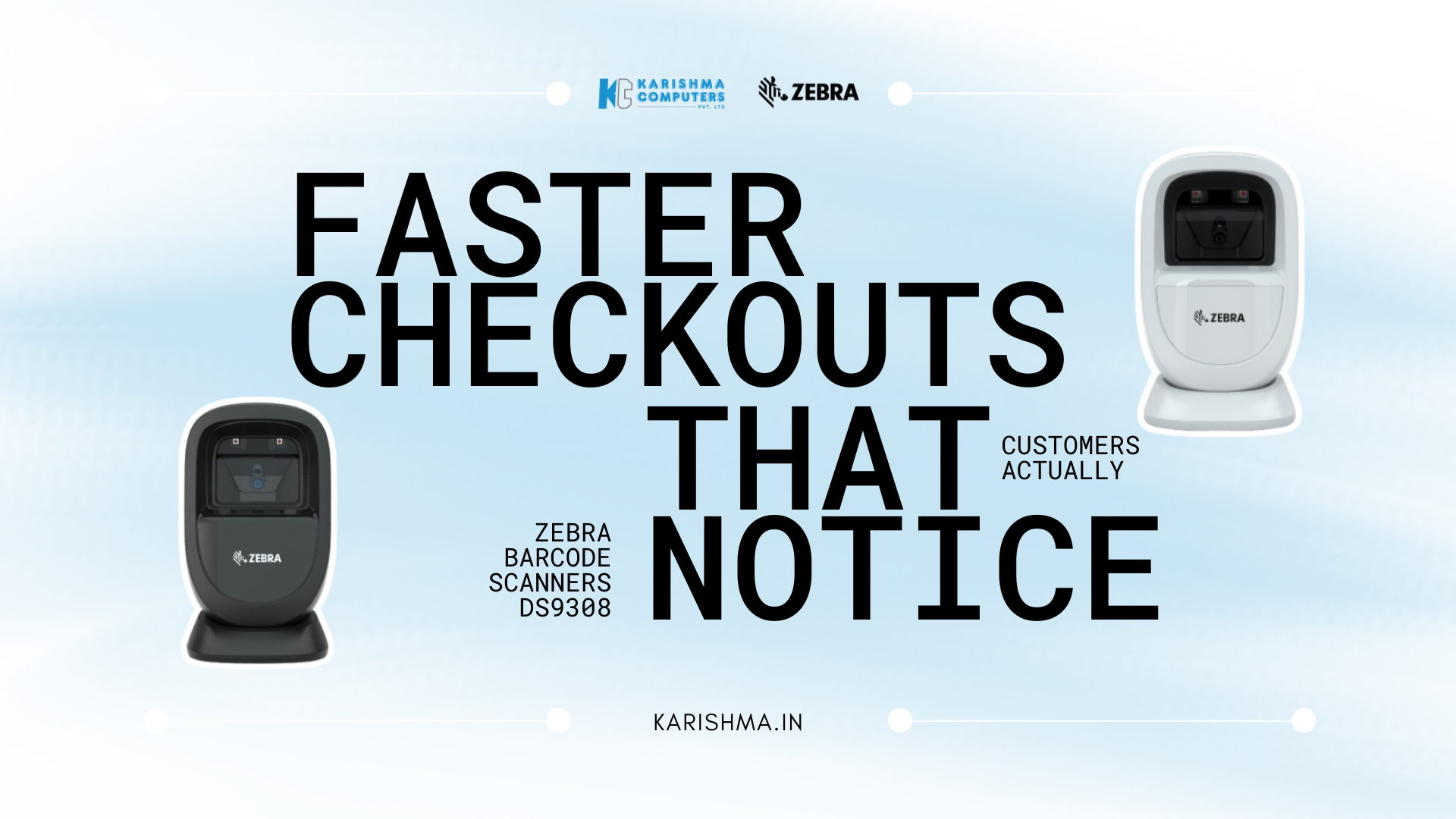
When Scanning Speed Reveals Why Omnidirectional Barcode Scanner Design Actually Matters A retail chain recently needed omnidirectional barcode scanner technology without understanding why. Long checkout lines during Diwali rush. Frustrated customers. Staff working at maximum speed but still falling behind. The bottleneck wasn’t staffing levels or payment processing. Standard barcode scanners were taking three attempts per item to register. That extra two seconds per product, multiplied across thousands of transactions daily, had created queues stretching to the store entrance. This scenario repeats across Delhi NCR’s retail, logistics, and manufacturing operations more frequently than most realize. The Scanning Reality Standard barcode scanners work adequately under ideal conditions. Clean barcodes, proper lighting, patient operators, moderate volume. The moment any of those conditions change, performance degrades noticeably. The Zebra DS9308 approaches scanning differently, starting with its core design. Point it generally toward a barcode from any angle upside down, sideways, at odd orientations and capture happens instantly. No precise alignment required. No multiple attempts. No workflow interruption. For that Saket retail operation, this single characteristic eliminated their checkout bottleneck completely. Staff stopped adjusting items, stopped making second attempts, stopped apologizing to customers. Scanning became invisible, which is exactly what operational efficiency looks like. Advanced Imaging For Damaged Barcodes A warehouse operation in Manesar deals with constant challenges around barcode condition. Damaged labels from rough handling during transport. Smudged printing from moisture exposure. Partially obscured codes from stacking and storage. Traditional devices struggle with imperfect barcodes, requiring manual entry or label replacement. Both options consume time and introduce error potential. The DS9308’s omnidirectional barcode scanner imaging technology reads codes that standard equipment rejects. Torn corners, faded printing, partially obscured sections—conditions that would normally halt workflow become non-issues. The device captures data even when barcodes have deteriorated significantly. That warehouse’s inventory accuracy improved by 23% after deploying DS9308 units. Not because their barcode quality improved, but because the technology adapted to real-world conditions rather than requiring perfect circumstances. The Speed Calculation That Changes Everything One second per scan sounds trivial until multiplication across operations reveals the actual impact. A logistics company in Ghaziabad processes 5,000 packages daily. Their previous equipment averaged three seconds per successful scan, including failed attempts and realignment time. The DS9308 reduced that to consistent one-second captures. Two seconds saved per package equals 10,000 seconds daily. That’s 2.7 hours of scanning time eliminated. Multiply across a month: 81 hours. Nearly two full-time equivalent positions worth of scanning time recovered without adding staff. Those reclaimed hours didn’t vanish. They redistributed to value-adding activities: quality checks, customer service, process improvements. The operational leverage from faster omnidirectional barcode scanner performance extended far beyond the scan itself. Industrial Environment Durability Manufacturing facilities, warehouses, and distribution centers present challenges that office equipment never faces. Dust, temperature variations, occasional drops, constant use throughout extended shifts. The DS9308 carries an IP52 rating, indicating protection against dust and water spray. Industrial environments in Okhla or Manesar industrial zones subject equipment to conditions that would destroy consumer-grade devices within weeks. One manufacturing operation reported their previous scanner investment cycle: new equipment every six months due to failure rates. After switching to DS9308 units, that replacement cycle extended to 24+ months with zero failures during that period. Durability directly translates to total cost of ownership. Initial purchase price matters less than operational life and maintenance requirements. Commercial-grade omnidirectional barcode scanner construction delivers long-term value that consumer devices cannot match. Integration Simplicity Across Platforms Enterprise operations run multiple software systems: inventory management, point-of-sale, warehouse management, ERP platforms. New hardware must integrate seamlessly or risk creating compatibility problems that cascade through operations. The DS9308 offers plug-and-play integration with major platforms. USB connectivity, driver support across operating systems, compatibility with existing software infrastructure. IT teams report deployment taking minutes per unit rather than requiring configuration sessions. A pharmaceutical distributor in Noida deployed fifty DS9308 units across their facility in a single afternoon. No specialized installation, no system downtime, no workflow interruption. The scanners integrated with their existing WMS immediately, and operations continued without transition issues. The Ergonomic Factor Staff scanning hundreds or thousands of barcodes daily experience physical strain from poorly designed equipment. Awkward grip angles, excessive weight, uncomfortable hand positions—seemingly minor issues that compound over eight-hour shifts. The DS9308’s lightweight design and ergonomic form factor reduce operator fatigue measurably. The trigger placement, grip angle, and balanced weight distribution allow extended use without discomfort. That retail chain in Saket noted reduced complaint frequency about hand strain after deploying omnidirectional barcode scanner units. Staff comfort directly improved during their busiest season when scanning volumes peaked. Presentation Mode Capability Retail and hospitality operations benefit from hands-free scanning where customers or staff present barcodes to a fixed device rather than handheld operation. The DS9308 functions in both modes without reconfiguration. A medical facility in South Delhi uses DS9308 units in presentation mode for patient wristband scanning. Staff place the scanner at bedside, and barcode capture happens automatically when wristbands enter the scan zone. This reduces infection risk from shared handheld equipment while maintaining operational efficiency. The same units redeploy to handheld mode for inventory management without requiring different hardware or additional investment. Versatility maximizes equipment utilization across different operational contexts. When Reliability Becomes Competitive Advantage Operational efficiency often emerges from removing friction points rather than adding capabilities. Scanning that happens consistently, quickly, under imperfect conditions, without requiring multiple attempts these characteristics transform workflow in ways that compound across operations. Zebra’s reputation in commercial-grade scanning technology stems from understanding that enterprise environments demand different performance levels than consumer applications. The DS9308 represents that understanding in practical form: equipment that works reliably under real-world conditions rather than requiring ideal circumstances. The Decision Threshold Organizations scanning fewer than 500 items daily might find omnidirectional barcode scanner capabilities exceed their requirements. At 1,000+ daily scans, particularly in challenging environments or with imperfect barcode conditions, the investment case becomes clear. For businesses where scanning speed impacts customer experience, inventory accuracy affects operations, or environmental conditions exceed standard equipment ratings, the DS9308 addresses

