
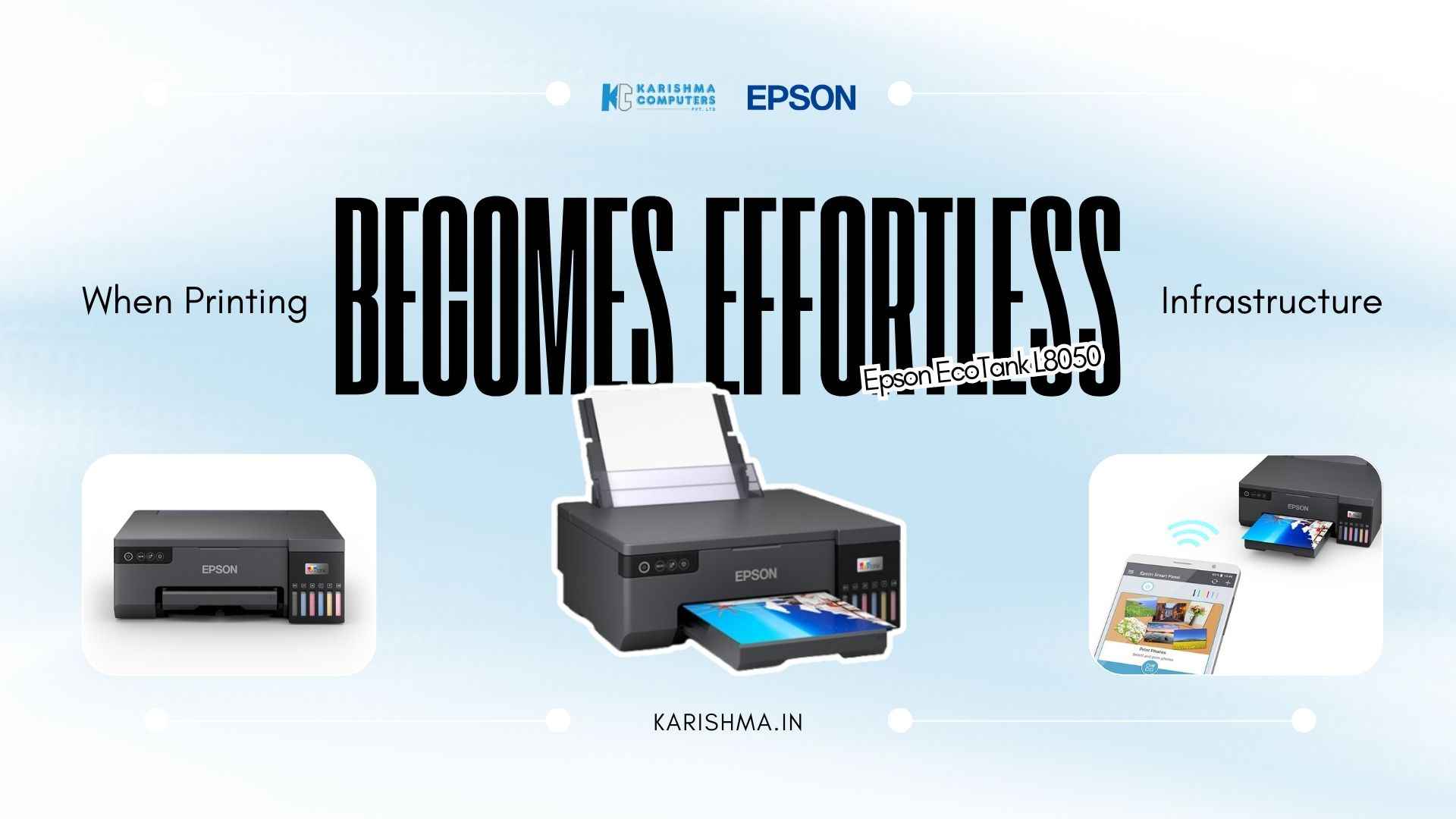
Epson EcoTank L8050 Cuts Print Costs 90% But Demands High Volume Commitment
When Monthly Ink Budgets Meet Epson EcoTank L8050 Economics A digital marketing Epson EcoTank L8050 inquiry arrived from Sector 18, Noida last Tuesday. The agency’s finance manager carried a six-month ink expenditure report. Twelve thousand color pages monthly for client presentations, pitch decks, and campaign materials. The numbers told an uncomfortable story. Cartridge-based systems had turned printing into a recurring line item that grew faster than headcount. Three printers running simultaneously. Constant cartridge replacements. Emergency supply runs disrupting workflows. Someone tracking inventory. Someone else managing vendor relationships for consumables. The agency wasn’t unique. This pattern surfaces repeatedly across Delhi NCR’s creative and professional services sectors. Businesses scale their output, then discover their printing infrastructure can’t scale economically. The technology works, but the economics break down. What Changes at 10,000 Monthly Color Page Thresholds Certain volume levels trigger different conversations. At 2,000 monthly pages, cartridge systems remain manageable. At 5,000, questions about efficiency emerge. At 10,000 and beyond, the entire cost structure demands reconsideration. The ultra-high-capacity ink bottle solution addresses this inflection point directly. A single set delivers approximately 8,000 color pages. For organizations running 10,000-12,000 monthly pages, that translates to roughly eight months between refills. Eight months where printing becomes automatic rather than managed. Eight months without procurement cycles for consumables. Eight months of predictable costs instead of variable expenses that spike unexpectedly. But the shift goes deeper than convenience. PrecisionCore technology ensures that page 7,943 maintains the same color accuracy as page 143. Heat-free printing means no warm-up delays, no quality degradation from thermal cycling, no color shifts mid-batch when producing 500-page client presentations. That consistency matters differently at scale. A law firm in Connaught Place producing 800-page case file compilations discovered this benefit. The ability to print complete sets overnight without quality variation or intervention eliminated the reprinting buffer they had built into timelines. Deadlines became actual deadlines rather than conservative estimates accounting for print failures. The Sustainability Conversation No Longer Optional for Businesses Three years ago, environmental footprint discussions rarely surfaced in B2B purchasing decisions. That changed. Corporate procurement now faces questions about waste reduction, energy consumption, and supply chain sustainability. The relevant numbers emerge here. Compared to cartridge-based systems, ink tank technology eliminates approximately ninety percent of consumable waste. For an organization running 120,000 annual color pages, that’s roughly 450 cartridges not entering the waste stream each year. An architecture firm in Gurgaon needed this data for a client sustainability audit. Their corporate client required supply chain environmental impact reporting. Being able to document a measurable waste reduction provided an answer where previously only vague commitments existed. Heat-free printing adds another dimension. Traditional laser technology generates significant thermal energy. The alternative approach eliminates that requirement, reducing both energy consumption and cooling demands. For offices already managing HVAC loads in Delhi’s summer climate, removing another heat source matters operationally and economically. Forty years of continuous innovation in efficient printing technology provides credibility when environmental claims surface in corporate discussions. This isn’t new positioning. It’s engineering philosophy that now aligns with procurement requirements. When A3 Capability Becomes Non-Negotiable for Operations The A3 size handling addresses specific organizational requirements. For some businesses, that specification alone drives the decision. A market research firm in Nehru Place produces client reports with full-page infographics and multi-panel layouts. Their previous A4-only setup meant either compromising design or outsourcing larger format printing. Both options created friction. Design compromises weakened presentations. Outsourcing added cost, complexity, and timeline uncertainty. Internal A3 capability eliminated those constraints. Report designs could expand to match data visualization needs. Client deliverables improved aesthetically and functionally. The change wasn’t revolutionary, but it removed a persistent limitation. Educational institutions face similar requirements. A coaching center in Karkardooma printing 15,000 monthly pages of study materials, practice tests, and visual aids needed consistent A3 output for charts and diagrams. The ability to handle varied page sizes within a single device simplified their production workflow considerably. The Question That Surfaces Repeatedly About Capacity Planning “Isn’t this overcapacity for current needs?” Perhaps. But scaling patterns reveal something important. Organizations rarely scale smoothly. Growth happens in jumps. Landing a major client. Expanding service offerings. Opening a second location. Seasonal volume spikes. An event management company experienced this reality. Their base load ran 8,000 monthly pages. During wedding season (October through February), volume spiked to 22,000 pages monthly. Their previous setup required adding temporary printers, coordinating multiple devices, managing varying quality outputs. The high-capacity solution absorbed those spikes without configuration changes or additional equipment. The same device that handled base load managed peak demand. That operational simplicity during their busiest, most stressful period proved more valuable than the cost differential suggested. What Reliability Actually Means at Enterprise Scale Printer reliability becomes a different consideration at higher volumes. A single failure doesn’t just delay one document. It blocks an entire production queue. A financial services firm in Saket runs compliance reports, client statements, and regulatory filings on strict deadlines. Their previous system averaged one significant failure quarterly. Each incident triggered crisis management, expedited external printing, deadline extension requests, and team stress. Six months after deployment, zero operational disruptions. The difference wasn’t just technical reliability. It was psychological. The team stopped building contingency plans around potential printer failures. That mental overhead disappeared. Enterprise-grade build quality targets this use case specifically. The engineering isn’t designed for occasional home printing. It’s built for sustained daily operation under business conditions. That engineering difference manifests in uptime, consistency, and operational predictability. The Total Cost Question Deserves Detailed Analysis Initial investment exceeds budget printer pricing significantly. That reality stops some procurement processes immediately. Others look deeper. A detailed cost analysis across 18 months reveals different mathematics. The digital marketing agency that opened this discussion ran the numbers. Their previous cartridge-based approach: three devices, recurring consumable costs averaging 18,000 rupees monthly, maintenance contracts, replacement equipment budgets. The alternative path: single device, ink refills approximately every eight months at 6,500 rupees per set, minimal maintenance requirements, no planned replacement within the analysis period. Eighteen months out, the